Author name: ashikanasrin629@gmail.com

Uncategorized

how to create a digital marketing strategy

1.Define Your Goals and Objectives “Why” is the first step in anything. It is essential to have a clear goal in mind before investing time or money in digital marketing. Examples of Goals: 2.Identify and Understand Your Target Audience Your marketing will be ineffective if you don’t know who your target audience is. You need to be clear about who you are speaking to, what matters to them, and where they spend their time on the internet. Research Your Audience: 3.Analyze Your Competitors and Market: Analysing your competitors enables you to discover what is successful in your sector and what you can improve upon. Steps: Tools: 4.Choose the Right Digital Marketing Channels: Choose the platforms that are most appropriate for your company after determining your objectives and target market. Utilise social media marketing to increase awareness and interaction, PPC advertisements for immediate traffic, and SEO for long-term visibility. Incorporate email marketing to cultivate leads and content marketing to inform your audience. Concentrate on the two to three main channels where your audience is most engaged, then grow as you do. 5.Create a Strong Content Strategy: The core of digital marketing is content, which is how you draw in, hold on to, and convert visitors. Steps to Plan Your Content: 6.Set Budget and Allocate Resources: Choose where and how much you are willing to pay. For instance Breakdown of the Budget: 40% goes into paid advertisements (Google, Meta); 25% goes towards content production (blog, graphics, videos); and 15% goes towards tools and software (SEO, analytics). 10% → Email and automation 10% → Influencer marketing 7.Implement, Track & Optimize: It’s not enough to just launch your initiatives; you also need to keep an eye on them and make necessary adjustments. Track Key Metrics: 8.Review and Refine the Strategy Compare results to your objectives at the conclusion of each campaign or quarter.

best digital marketer in calicut
Uncategorized

What is digital markeTING?

Digital marketing is the use of the internet and digital technologies to promote goods, services, or companies through online channels. Through websites, social media, email, and search engines, places where individuals spend the majority of their time, it links companies with prospective clients. Digital marketing enables you to target particular audiences, monitor performance, and analyse outcomes in real time, unlike traditional marketing techniques like TV commercials or billboards. It enables companies of all sizes to communicate directly with prospective clients and expand more quickly and affordably. 1. Building a Strong Online Presence Building a credible and professional online persona is the first step in digital marketing. A well-designed website that represents your brand, highlights your goods and services, and gives users useful information is the first step in this process. An SEO-optimized website that loads quickly and is optimised for mobile devices serves as the cornerstone of all your marketing initiatives.In addition, keeping up to date social media accounts, establishing a Google Business Profile, and even sending out email newsletters make your business seem reliable and consistent across a variety of channels. 2. Driving Targeted Traffic The objective is to draw in the correct audience, those who are truly interested in what you have to offer—once your presence has been established.To do this, digital marketers employ a number of strategies, including: Search Engine Optimization (SEO): Optimising your website’s content with pertinent keywords, backlinks, and technological components to rank higher on search engines like Google is known as search engine optimisation, or SEO. SEO makes sure your brand appears when people search for what you have to offer. Social Media Marketing: To reach your ideal audience and increase brand awareness, share captivating posts, reels, stories, and sponsored advertisements on social media sites like Facebook, Instagram, and LinkedIn. Pay Per Click (PPC) Advertising: launching social media or Google tailored advertising campaigns so you only have to pay when a user clicks on your link. This is perfect for producing leads and results quickly. Content Marketing: producing and disseminating informative media, like as blogs, infographics, or films, that inspire, inform, or amuse your audience while discreetly advancing your brand.Together, these channels bring targeted traffic to your landing pages or website. 3. Engaging and Nurturing Leads The next stage after obtaining traffic is to establish credibility and maintain audience interest. This is where personalised communication, social media engagement, and email marketing are useful. Businesses cultivate leads over time by answering questions, offering helpful information, and communicating consistently.For instance, you can send a sequence of automated emails informing someone about your services and motivating them to proceed if they download a free guide or sign up for your newsletter. The next stage after obtaining traffic is to establish credibility and maintain audience interest. This is where personalised communication, social media engagement, and email marketing are useful. Businesses cultivate leads over time by answering questions, offering helpful information, and communicating consistently. For instance, you can send a sequence of automated emails informing someone about your services and motivating them to proceed if they download a free guide or sign up for your newsletter. 4. Converting Visitors into Customers Visitors become paying customers through conversions, which are the result of engagement and trust-building. This may occur by: well-designed landing pages with obvious calls to action, such as “Contact Us” or “Buy Now.” discounts, free trials, or offers that encourage customers to take action. advertisements that remind people about goods they looked at but didn’t buy. The conversion process is supported by analytics tools that track user behavior such as how long they stayed on your page, which products they viewed, and what actions they took. This data helps refine the strategy further. 5. Analyzing Performance and Optimization One of the greatest strengths of digital marketing is measurability. Using analytics tools like Google Analytics, Meta Ads Manager, or Search Console, marketers can monitor every campaign in real time. You can track: Website traffic and user behavior Ad clicks, impressions, and conversions Email open rates and engagement Social media reach and follower growth Based on these insights, businesses can optimize their strategies, adjusting ad budgets, improving content, testing different creatives, or refining keywords. Continuous improvement ensures better ROI (Return on Investment) over time. 6. Building Long-Term Relationships The process doesn’t end after a sale. The ultimate goal of digital marketing is to build long-term customer relationships. Brands continue engaging customers through loyalty programs, social media interaction, and personalized follow ups. This encourages repeat purchases and brand advocacy turning satisfied customers into promoters. Digital marketing works by combining creativity, data, and technology to take customers through a journey:from awareness → to interest → to trust → to action → to loyalty.It’s an ongoing process of connecting, communicating, converting, and continuously improving.

best digital marketer in calicut
Uncategorized

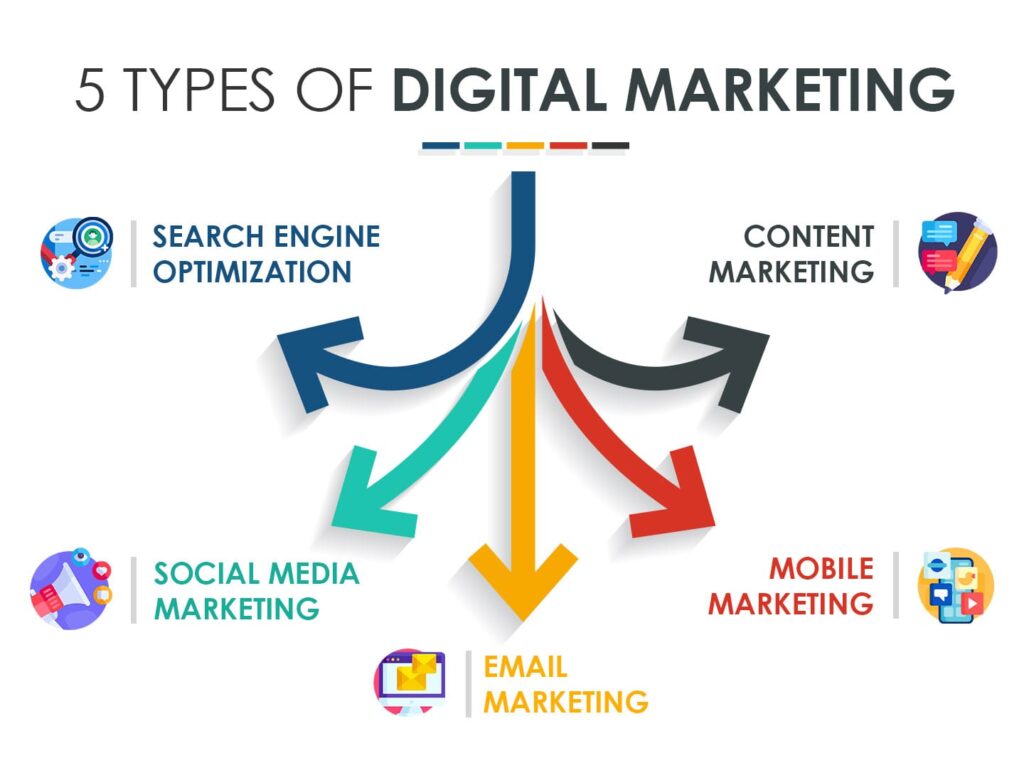
Types of digital marketing:

1. SEARCH ENGINE OPTIMIZATION (SEO): SEO is the process of making changes to your website so that it shows up higher on search engine results pages (like Google, Bing, or Yahoo) when people look for something related to your business. People who are looking for the goods, services, or information you provide will find your website more easily thanks to SEO. SEO drives free (organic) traffic to your website in contrast to paid advertisements. Why SEO Is Important: How SEO Works: Special programs known as “crawlers” or “bots” are used by search engines like Google to explore every website on the internet. They examine the links, content, and organisation of your website to determine: Main Components of SEO: On-Page SEO: You can improve your website’s search engine optimisation by doing these things. Off-Page SEO: These are actions taken outside of your website to boost its credibility and authority. Technical SEO: This guarantees that your website is technically optimised for easy reading and indexing by search engines. Local SEO: Local SEO is ideal for shops, salons, cafes, and service businesses in a particular location because it concentrates on optimising your business for local search results. 2. Social Media Marketing (SMM): Using social media sites like Instagram, Facebook, LinkedIn, YouTube, TikTok, or X (Twitter) to market your business, goods, or services, engage with your audience, and cultivate a following of devoted clients is known as social media marketing, or SMM. Simply put, the main goal is to use social media to: Main Goals of Social Media Marketing: How Social Media Marketing Works: 3. Pay-Per-Click Advertising (PPC): Advertisers that use pay-per-click (PPC) digital marketing pay a fee each time a user clicks on their ad. To put it another way, you are purchasing website traffic instead of obtaining it naturally through SEO. PPC enables companies to immediately contact their target audience, which is very helpful when you want to increase traffic, visibility, or revenue right away. How PPC Works (Step-by-Step): First, pick a platform: Choose the location for your advertisement: Main Purpose of PPC: 4. Email Marketing: One digital marketing strategy is email marketing, which is sending emails to a list of recipients (your audience or clients) in order to: Main Goals of Email Marketing: Types of Email Marketing Campaigns: 1.Welcome Emails: Sent to new subscribers in order to establish a positive first impression and introduce your brand. 2. Promotional Emails: Declare sales, discounts, or the introduction of new products. 3. Newsletter Emails: frequent revisions to your blog’s content, news, or brand. 4. Transactional Emails: triggered by a particular consumer action (such as changing a password or placing an order). 5. Re-engagement Emails: To re engage inactive subscribers, target them. 6. Lead Nurturing Emails: Leads should be educated or guided through your sales funnel until they are prepared to make a purchase. 5. Content Marketing Instead of promoting your product directly, content marketing involves producing and disseminating relevant, engaging, and helpful information (such as blogs, videos, social media postings, etc.) to draw in and keep your audience interested. The objective is to gain people’s trust, teach them something, and inspire them to believe in your brand so that they would eventually buy from you. Main Purpose of Content Marketing: How Content Marketing Works: 1. Understand Your Audience: Prior to producing content, you need to be aware of your audience: 2. Create Useful Content: Now, produce content that benefits or resolves issues for your audience. This might be: 3. Share Content on Right Platforms: Sharing your useful content on the channels where your target audience is most active comes next. The goal and audience behaviour of each platform vary, therefore picking the appropriate one can assist your content efficiently reach a wider audience. For instance, lengthy instructions and blog posts are most suited for your website, whereas instructional videos and tutorials are best suited for YouTube. Facebook and Instagram are excellent platforms for visual content that immediately captures attention, such as carousels, reels, and brief films. Professional and business-related postings work well on LinkedIn, and email newsletters allow you to send offers or updates to your devoted followers directly. The objective is to regularly post and market your material through the appropriate channels so that it reaches the people who will find it most interesting and helpful. 4. Promote the Content: If no one sees it, even the best stuff is useless. Thus, you need to advertise it by: 5. Measure the Results: Use tools like Instagram Insights or Google Analytics to examine your performance after publishing, Verify metrics like:

Scroll to Top